Train your mind like you train your body.

A 12 week program with Coach Vinny Malts, the NHL's first mindset performance coach. 20 players, U15 and older. Starting November 8.

The first 10 to register get a private 30 minute call with Vinny.

The difference between your best night and your normal night isn't talent. It's trainable.

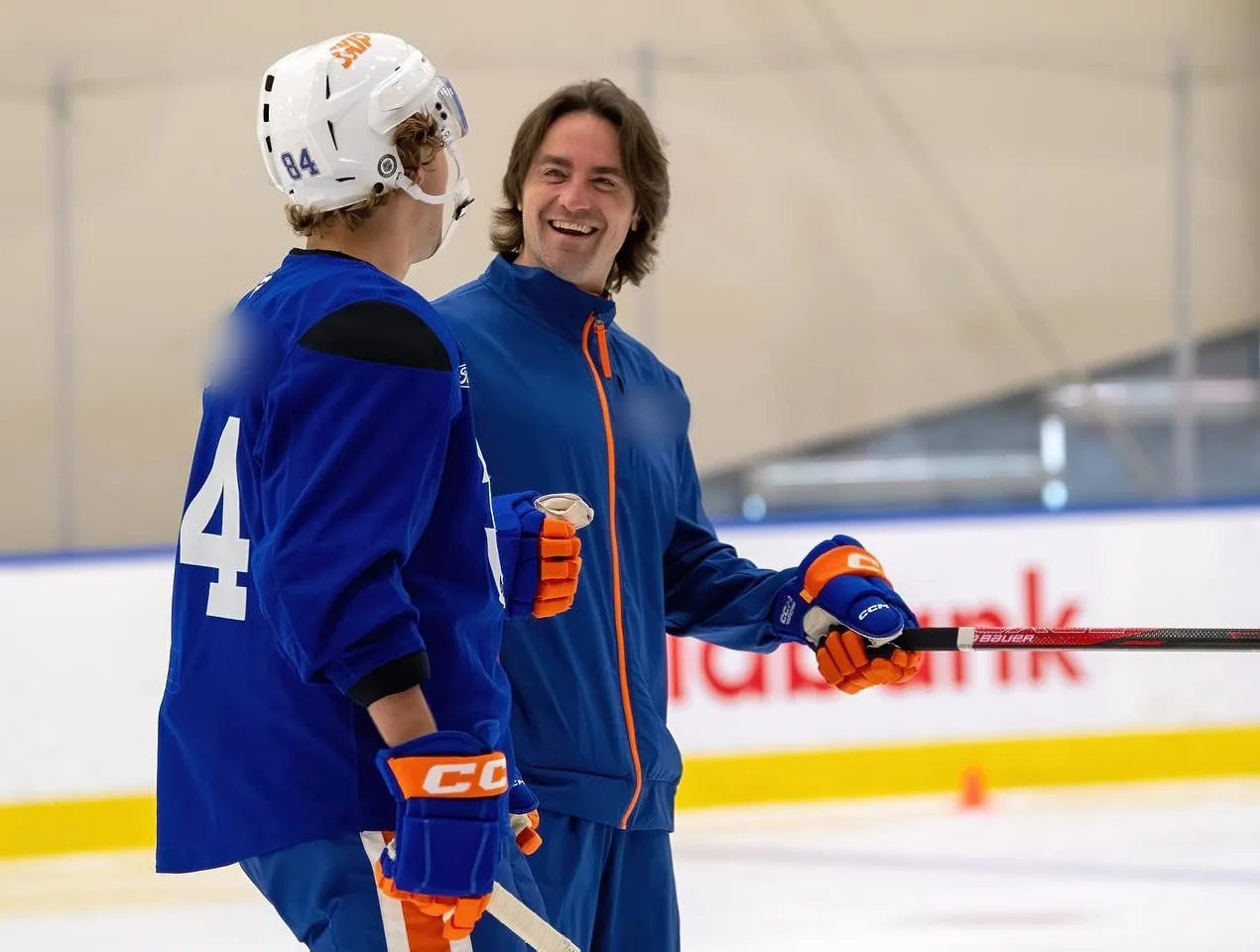
Coach Vinny Malts smiling and talking with a player on the ice

Why now

Right now, everybody has an opinion about how good you are.

Your coach. The coach who didn't pick you. Your parents, who want it for you as badly as you do. Guys on your own team who'd never say it to your face.

And somewhere in all of that, you're supposed to work out what you actually believe about yourself.

Most players never do. They take whichever opinion was loudest that week and carry it into the next game.

But you've already had the night where it all worked. The game felt slow, the puck kept finding you, and you weren't thinking about anybody in the building. You know that game. You could probably name the date.

That wasn't luck and it wasn't somebody's opinion. That was evidence. You just haven't been taught how to read it, or how to get back there on purpose.

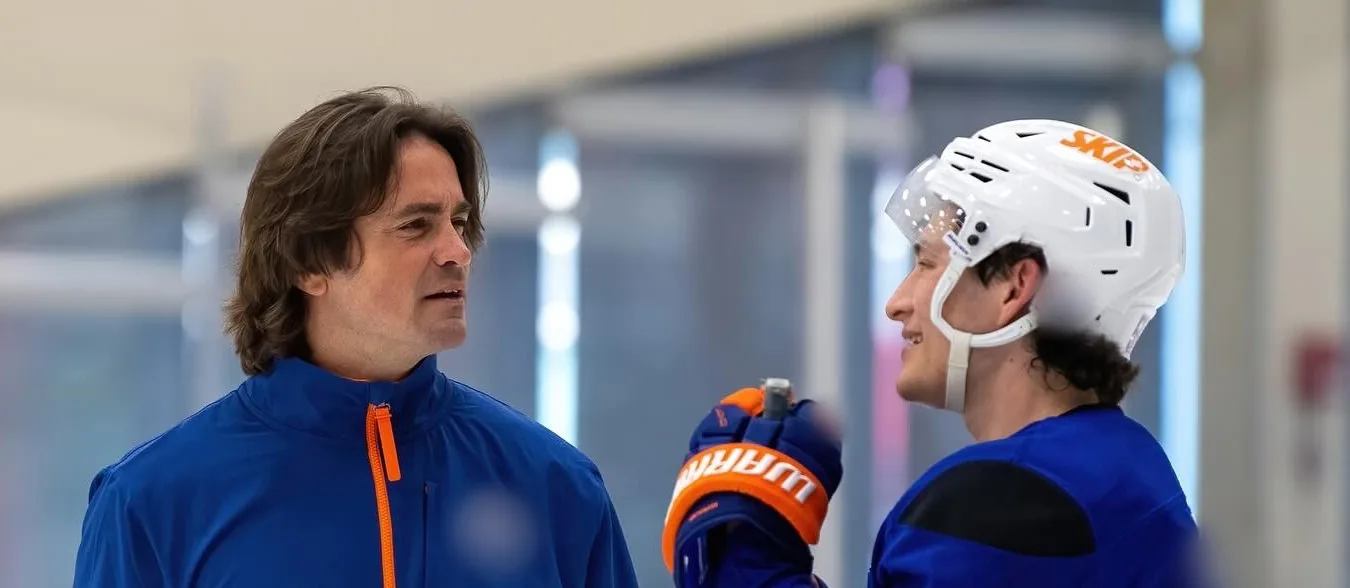
Coach Vinny Malts talking with a player on the ice

Here's something Vinny hears constantly.

Players come to him at 18, 19, 20. Junior guys, college guys, pros. And at some point almost every one of them says a version of the same sentence.

I wish I'd started learning this earlier.

Not because they're behind. Because they can finally see what it does, and they can do the math on what it would have been worth to have had it at 15 instead of 20.

That's the entire reason this group starts at U15.

At 20, you use this to fix something. At 15, you use it to build something, and you've got 4 or 5 seasons to compound it before anybody's making final decisions about you. Same system. Completely different runway.

And right now, nobody is teaching it to you.

You've been coached on your hands, your feet, your shot, your reads. Everything that shows up in the box score. Nothing about what's going on in your head when the game speeds up, the building gets loud, and it matters.

Not at your level, not for you.

And not for the guys you're competing with either.

So it's sitting there, for whoever decides to pick it up first.

It's a skill. Not a personality, not something you either have or you don't. You train it the way you train everything else. On purpose, before you need it.

What we're asking of you. 12 weeks. Something from you in every single one of them.

A thought exercise every week. A check-in every week. A short video from Vinny in the weeks between sessions. A group chat that stays open the whole time. And 6 of those 12 weeks, 90 minutes live with him and the other 19.

You're honest in that room, and you do the work between the calls, because between the calls is where it lands.

If that sounds like a lot, it is. That's the point.

20 spots. The same system Vinny runs with the pros.

Not a version of it. It.

Where your head actually goes
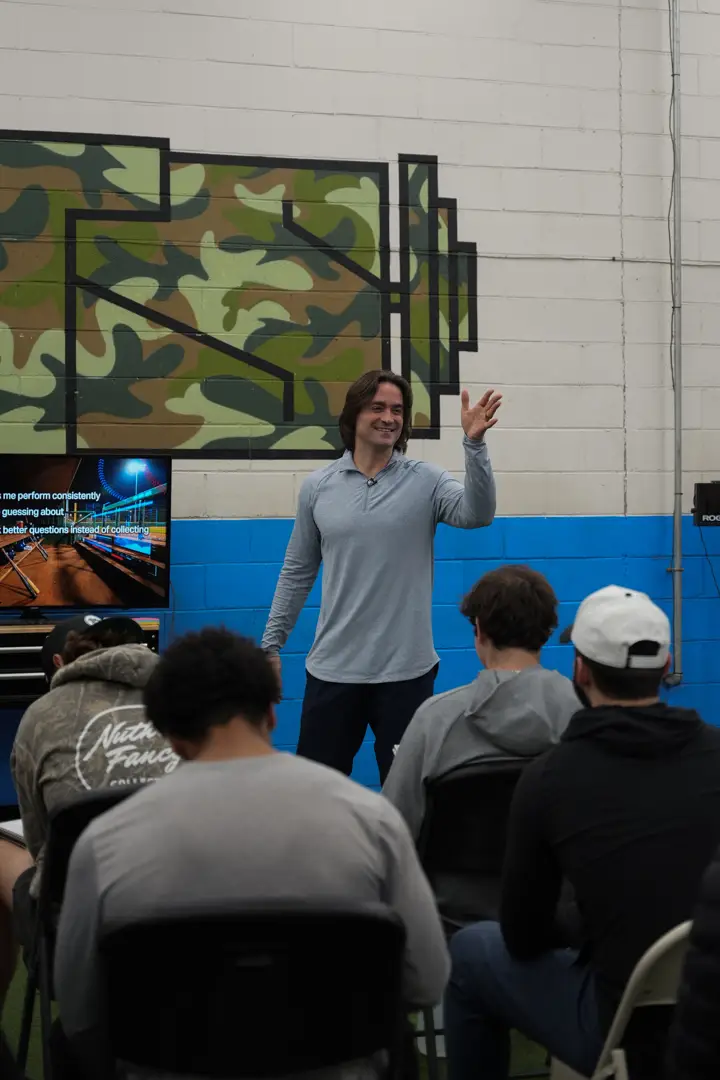
Coach Vinny Malts leading a group mindset session with young hockey players

One bad play shouldn't cost you your next 3 shifts.

But you know what happens. You turn the puck over, you get back to the bench, and even once you're back out there you're still thinking about it. Now you're playing not to make another mistake instead of playing to make something happen.

Some nights you play your game. Some nights you don't. A step behind and you can't work out why, thinking about the last shift instead of this one.

And you know you're better than what you just showed. You've got no way to prove it, because the only place it shows up reliably is practice.

Here's where your head goes instead.

Backwards

The shift you didn't get. The play you didn't make. The goal that didn't go in. The ice time you should have had.

Forwards

Am I getting drafted. Do I need an agent. Where am I training this summer. Do I need a different coach. Is this even the right team.

Both of those feel like work. Neither of them is.

Everything on that list is either behind you or not here yet. Meanwhile the only question that changes anything today is the one nobody asks you. What is the most important thing for me to work on right now?

So you ask for help. Relax. Be confident. Stop thinking so much. Control what you can't control.

All good ideas.Nobody tells you how to actually run any of them.

Meanwhile, here's what is actually happening to you.

Coaches make up their mind about you faster than you think, and what they decide first tends to stick. Vinny has watched teams release players who'd have been better for them than the guys they kept, purely because of the order things happened in.

And there's usually one thing your coach wants from you that you're quietly fighting. You'll do everything else. The gym, the practices, the sleep, moving away from home. Then the one thing that holds the keys, you resist, because somewhere underneath it you think he is wrong about you.

None of that is a skill problem.

And here's what's actually going on. There's 40 things you could be working on right now, and every one of them is legitimate. Your skills coach has 3. Your head coach has 2 more. Your assistant coach has some good advice. Somebody sent you a video.

So you carry all of it out onto the ice. You're thinking about 8 things, and the guy across from you is thinking about 1.

He's not smarter than you. He just knows which one.

There's a system for it. It starts with getting clear on what is actually true about your game, from evidence rather than hope. That part is teachable, and it doesn't require one on one.

You can work it out on your own. Most players do. It takes them about 3 seasons, and a lot of shifts they don't get back.

What it requires is a room of players who are serious, and one small enough that nobody hides in it.

20 is that room.
Who this is for

A pro wakes up tired and goes anyway, without having the conversation with himself about it. An amateur wakes up tired and negotiates. If you already know which one you are, keep reading.

This is for the player who is already deeply committed. Not the one who wants to become committed. The one who already is.

This is for you if:

  • You're U15 or older, playing junior, prep, Tier 1 or AAA.
  • Nobody has to chase you. You train when it isn't scheduled, you sleep, you eat like it matters, and school isn't falling apart.
  • You already nerd out on this stuff.
  • What you want now is how to handle the pressure. Your role in it, communicating in it, leading in it, responding to it instead of reacting.
  • You're willing to be honest in a room with 19 other players.

This isn't for you if:

  • You're looking for someone to make you more committed.
  • You want to be told what to think.
  • The day to day basics aren't already handled.

Plainly: if the commitment isn't already there, the conversations in this room will be over your head. That isn't about your ceiling. It's about whether this is the right room for you right now.

What you work on

The mindSET Method™ is the 6-part system Vinny runs with professional players. Over 12 weeks you work through all 6, live, with the group, and the 12 weeks move in a deliberate order.

First you find what's actually interfering with your normal game. Not what you assume it is. Then you build your own thought process. Yours, not a template off somebody else's shelf. Then you practice it under pressure. By week 12 you're working from something repeatable, and you take it into the rest of your season.

What that means you can do by the end:

  • Reset after a mistake instead of carrying it 3 shifts
  • Quiet the noise before a game and during one
  • Run the same pregame process every time instead of hoping
  • Tell the difference between your performance and your coach's reaction to it
  • Find the 1 cue you actually need in a moment, instead of 8

All of it built on your own evidence, not somebody's opinion of you.

Confidence isn't something anybody hands you.It's what's left when you've got enough of your own proof about yourself to stop needing it.

The 6 parts

1

Know what is actually true about your game

Not what you hope. What the evidence says. When you know instead of guess, you play faster, because you aren't spending the shift deciding.

2

Own both sides, what you're good at and what you aren't

Most players can list what they're weak at and go quiet when you ask what they're good at. Owning both is what gets you heard when you talk to a coach.

3

Cut the list down

What deserves your attention right now, and what you can put down. Everything extra you carry costs you.

4

Decide what you're actually building toward

Built on what you have already proven, not on what you imagine.

5

Play to a standard you chose

And be honest about whether you're living it.

6

#play4THATfeeling

Learn to recognize what emerges from the work you put in. You stop performing for other people and start playing for how it feels when it's working. That's the one everything else is building toward.

What you get

12 weeks. Here is what's in them.

  • 6 live sessions with Coach Vinny. Sunday evenings, 7:30pm ET. 60 minutes of teaching, then 30 minutes of open Q&A for anyone who wants to stay on.
  • Small group breakouts. You won't sit in a room of 20 and listen. You break out, work it, come back.
  • Every main session recorded and yours to keep. Breakout rooms are never recorded.
  • Mindset Monday. A short video from Vinny in the weeks between sessions.
  • Weekly thought exercises. Yours to work through. Nobody grades them.
  • Weekly accountability check-ins.
  • A private WhatsApp group. Players only. Voice or text, ask anything, all week.No parents in it.
  • A copy of The Book on Mindset, Vinny's book.
  • The full digital workbook, built from everything the group covers.

First 10 only

The first 10 players to register get a private 30 minute call with Vinny. One on one, just them.

10 calls. That's it. You fill out a short questionnaire beforehand so none of it gets spent catching up.

This is the part that takes real time out of his season, which is why there are 10 of them and why they go to whoever moves first.

20 spots. 10 calls.

What changes

Your best night doesn't need to change. Your normal night does.

Four things, and they're the four players ask for by name.

Confidence.

Not manufactured. Built off your own evidence, which is the only kind that holds up.

Consistency.

The gap between a good player and a pro isn't a different skill. It's doing the thing you already do from about 70 percent of the time to 85 or 90. That's what they're actually measuring, and if you aren't consistent they won't look at you at all.

Clarity.

Knowing what to think about, and what to leave alone.

Communication.

Saying what you're good at and what you aren't, to a coach, out loud, without flinching.

Which looks like this:

  • You stop losing shifts to second-guessing.
  • Your coach sees a player who knows what he's doing out there.
  • You're the same player in a big game as you are on a Tuesday.
  • You can have the conversation about your role instead of waiting to be told.

And you think less, not more. When you know what matters to you, there's less to decide.

And one more thing.

At some point in that room, one thing lands for you. Something somebody else says, or something you say out loud for the first time. And you feel the weight come off.

You've been playing heavy.Nobody told you there was another way to play.

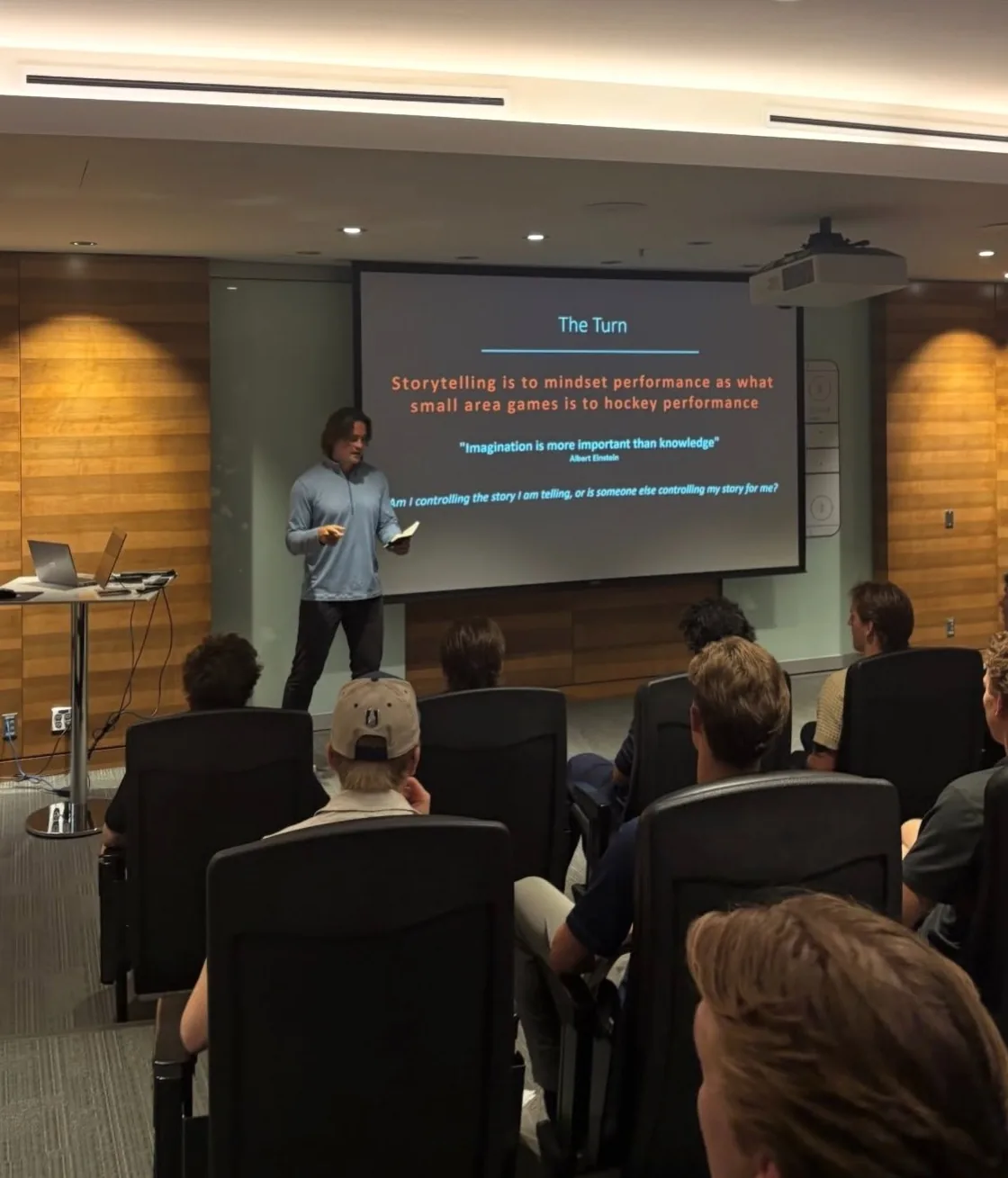
Coach Vinny Malts presenting to a room of players

Nobody here is broken

The industry treats the mental side as a phone call you make when something has gone wrong. Call Vinny, this kid is messed up in the head.

That isn't what this is.

The majority of the players Vinny works with privately are the best of the best, and they're there for the edge. Not because anything is wrong.

You go to school to get educated. You go to the gym to get strong. You work on this so your thinking gets faster and quieter. It's trainable, and you train it before you need it.

For the first time in my career, I realised the next level for me wasn't physical. I played the entire season healthy, didn't miss a single day, and felt sharp every game. I've never had that in my career.

Matt Tompkins
Professional goaltender

Coach Vinny helped me build a mindset process that's actually mine. By the end of the season I had my own answers in big moments and I trusted how I was thinking the game for myself.

Callum Croskery
Team Canada U18

He's helped me simplify my process so I can repeat it consistently at a high level.

Erik Kald
BCHL top defenceman finalist

What I've loved about working with Coach Vinny is the open engagement — how easy it is to talk about whatever's on my mind. I always value his perspective because this is what he specializes in, and I like seeing things from a different angle. Our talks on mindset get specific to me and what I need to do — I walk away knowing exactly what my focus is. My mindset feels so much better after we talk, and it helps me feel comfortable and ready to play my game.

Isaac Howard
NHL Forward · 2025 Hobey Baker Award Winner

At a pivotal point in my career, I turned to Coach Vinny to develop the mental strength and clarity needed to elevate my game. He helped me build the tools to navigate challenges, adversity, and the pressures of competing at a high level. The impact he's had on my career cannot be overstated.

Alex Vlasic
NHL Defenseman · 2025 World Championship Gold Medalist

Coach Vinny provides a valuable perspective beyond parental insights, helping competitive hockey players translate ideas into actionable steps, on and off the ice. He listens and guides the problem-solving process so players and leaders alike get a real sense of accomplishment after every interaction.

Stan Bowman
NHL General Manager

Ever since I started working with Vince nearly three years ago, his knowledge, dedication, and hockey IQ have been second to none. He is an incredible person with an exceptional mind who is fully committed to helping athletes reach their potential. He's an asset I never knew I needed, and working with him has been one of the best investments I've made in myself.

Ethan Wyttenbach
2026 Tim Taylor Award Winner (NCAA National Rookie of the Year)

It's been awesome working with Coach Vinny for this past season, he helps you become genuinely aware of your process and what you specifically need to do to become the best version of yourself. He makes you more conscious of the decisions you make and how compounding those decisions over time raises your standard. I'm extremely appreciative of the work we've put in together.

Joey Argentina
Captain of the Des Moines Buccaneers, USHL

Since working with Vinny, my mental state and thought process have drastically changed, I've realised you can control far more of your emotions and how you view situations than I once thought. Before working with him, I struggled to understand why I felt the way I did during games. Through Vinny's exercises, I learned that you can control how you feel and how you respond to any situation.

Liam Frier
New Hampshire Mountain Kings, NAHL

Coach Vinny has been part of my hockey journey since the beginning, he taught me the game when I was young and has helped elevate my game to the next level. The biggest change for me has been knowing how to produce with my team even on the nights I don't have it, by sticking to my strengths. I've got an immense amount of respect for what he's done for my game.

Chase Priskie
Pro Defenseman & Former Captain, Quinnipiac University

Vince Malts has worked with every level of athlete from youth to the NHL, and his concepts have value far beyond the rink. He is fair, honest, and trustworthy, with over 20 years of experience guiding decision-making and building the mindset required for success on and off the ice.

Doug Christiansen
ECAC Commissioner

Coach Vinny gets players to say what they want, hear what the coaching staff wants, and holds everyone to their own words. He never picks sides, he brings people together in a way that fills the trust gap players can't always give coaches. With today's player, his message hits harder and cleaner.

Colin Chaulk
Professional Head Coach, American Hockey League

Coach Vinny's presence and communication skills have brought our group closer, especially with new faces and different personalities. He doesn't bombard you, he'll grab a coffee, talk about what's going on, and let you come to him. That's how he builds trust, and he's the first guy I go to when I'm working through something.

Seth Griffith
Professional Captain · 2x AHL All-Star

The details

Length

12 weeks

Commitment

Weekly. Six 90-minute live sessions, plus a thought exercise and a check-in every week in between

Sessions

6 live sessions, every other Sunday

Dates

Nov 8 · Nov 22 · Dec 6 · Dec 20 · Jan 10 · Jan 24

Time

7:30pm ET. 60 minutes teaching, 30 minutes optional Q&A

Where

Zoom

Size

20 players

Ages

U15 and older

Investment

$1,197

Entry

Claim your spot below. 20 spots, first come

Why every other week. You're in season. Every other Sunday gives you time to use what you learned before the next one, instead of collecting lessons you never apply.

Your name isn't published anywhere. The roster stays private. If you want to tell people you're in it, that's your call. It won't come from us.

Why this exists

Coaches kept calling. So did agents, families, and players he'd worked with before. All of it some version of the same question.

Can you do something for my guy, in season, now.

For a long time the answer was no.

Vinny's main work is in the NHL. During the season that takes most of what he has, and it's the reason he hasn't been able to take private clients for much of the year. The only thing he had was one on one, and there was no room in it.

So this is the answer to that question. Not a smaller version of private coaching. A different thing, built for the part of the year when players need it most and nobody has any time.

12 weeks. 20 players. The same system he runs with the pros. Private work with him is a 6 month minimum commitment, and it isn't something he can offer at the moment. This is $1,197, once.

And this is the one part you can't do for him. You can pay for the ice and the gym and the skills coach. You can't hand him belief.

So one thing, plainly. If you want this more than he does, have that conversation before you register. He doesn't have to arrive confident. He does have to arrive willing.

This isn't a back door into his private work.

It's its own thing, and it's the only thing he has ever opened to players directly. And he doesn't know whether he'll run another group like this.

And the room isn't a compromise. It's a mechanism.

What you're joining is a team. 20 players from different programs, different leagues, different parts of the map, in one locker room for 12 weeks. And not one of them is competing with you for a spot.

That's a room almost no player ever gets. You say the thing out loud and 19 guys nod, because every one of them has been carrying some version of it. You hear somebody you respect name the thing you've been thinking and never said. You borrow confidence off him. He borrows it off you. You stop wondering whether you're the only one.

By the end of 12 weeks these are the guys you text after a bad game. That part isn't on the schedule and it's most of why this works.

In Vinny's experience it works better, and faster, than doing it alone. It's the one thing private coaching can't give you.

One more thing.

The group chat is players only. No parents in it. That's deliberate. Players say things to each other that they won't say with an adult reading over their shoulder, and that honesty is where most of the value is. Vinny is in the room the whole time.

How to join

20 spots. Registration closes October 31, or when they're gone.

There's no application and no approval process. You've read who this is for. You know which one you are.

If you're under 18, have your parent or guardian complete the registration with you.

Registering secures one of the 20 spots. You'll get a confirmation straight away, the 6 session dates for your calendar, and a short form so Vinny knows who you are before session one.

All sales are final. Two-payment option available.

FAQ

Why only 20?

Past 20 nobody gets heard, and if nobody gets heard it doesn't work.

Is this the same thing you do with pros?

Yes. Same process, same order.

What if I miss a session?

You're in season, so at some point it may happen. Every main session is recorded and yours to keep. Watch it back, and bring your questions to the group chat that week.

Will people know I'm in this?

Only if you tell them.

Are my parents in the group chat?

No. Players only.

Is this one on one with Vinny?

No, and that's deliberate. These are group sessions. You get 30 minutes of open Q&A after every session, small-group breakouts inside them, and Vinny giving feedback in the group chat during the week. The only one on one is the private call, and that goes to the first 10 who register.

Why this and not more ice time, or another skills coach?

Because you've already done that, and you know what it bought you. The physical side is handled. This is the part nobody has coached, and it's what decides whether the rest of it shows up when it matters.

Can I really commit to every other Sunday in season?

That's exactly why it runs every other week instead of every week. 6 Sunday evenings across 12 weeks, 7:30pm ET. If a game or travel takes one of them, you watch it back and bring your questions to the group that week.

Is there an application?

No. Read who this is for, and if that's you, take a spot.

12 weeks.20 players.November 8 to January 24.

You already know what your best game looks like. This is where you learn to get there on purpose.

Train your mind like you train your body.
Play for that feeling.

20 spots, closes Oct 31

Claim your spot
Claim your spot